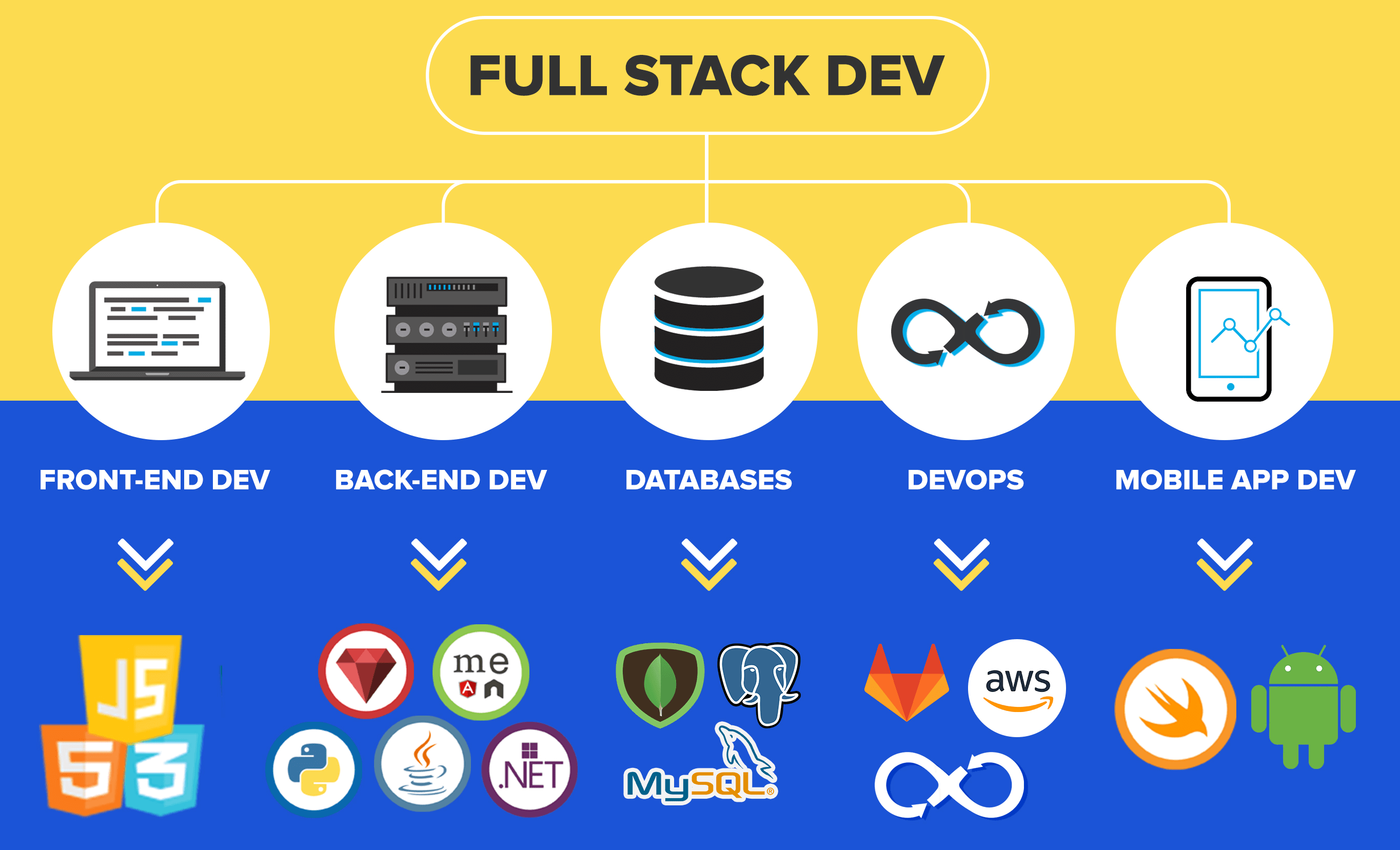
A Guide to Becoming a Full-Stack Developer
As technology continues to evolve, the demand for full-stack developers is increasing
rapidly. Full-stack developers are those who can work with both front-end and back-end
technologies, as well as have a strong understanding of databases and server-side
architecture. If you're interested in becoming a full-stack developer, here's a guide to
help you get started.
1. Learn the Fundamentals of
Programming
Before you can become a full-stack developer, you need to have a strong foundation in
programming. This includes understanding concepts such as data structures, algorithms, and
programming paradigms. You can learn these fundamentals by taking online courses, reading
books, or attending coding bootcamps.
2. Choose a Programming Language
Once you have a strong foundation in programming, it's time to choose a programming language
to specialize in. Some popular languages for full-stack development include JavaScript,
Python, and Ruby. Each language has its own set of advantages and disadvantages, so it's
important to choose one that aligns with your goals.
3. Learn Front-End Development
Front-end development involves building the user interface of a website or application. This
includes HTML, CSS, and JavaScript. To become a full-stack developer, you need to have a
strong understanding of these technologies, as well as front-end frameworks such as React,
Angular, and Vue.js.
4. Learn Back-End Development
Back-end development involves building the server-side of a website or application. This
includes programming languages such as Node.js, Ruby on Rails, and Django. You also need to
have a strong understanding of databases such as MySQL, MongoDB, and PostgreSQL.
5. Practice Building Applications
The best way to become a full-stack developer is to practice building applications. This can
include building your own projects or contributing to open-source projects. By building
applications, you'll gain practical experience and learn how to solve real-world problems.
6. Continuously Learn and Stay
Up-to-Date
Technology is constantly evolving, so it's important to continuously learn and stay
up-to-date with the latest trends and technologies. This can include attending conferences,
reading industry blogs, and following thought leaders on social media.
7. Build Your Portfolio
Finally, to showcase your skills and attract potential employers, it's important to build
your portfolio. This can include your own website, projects you've worked on, and
contributions to open-source projects. Having a strong portfolio can help you stand out from
other candidates and land your first job as a full-stack developer.
Conclusion
In conclusion, becoming a full-stack developer requires a strong foundation in programming,
a specialization in a programming language, a deep understanding of front-end and back-end
development, practical experience building applications, and continuous learning. By
following this guide, you can become a successful full-stack developer and advance your
career in the technology industry.